What is ACS Citation Style? (Simple Guide for Students)
Chemistry papers are hard work. You spend hours in the lab and more hours writing. Don’t let a bad ACS citation ruin your grade. We’ve got you covered with this guide.
What is ACS Citation Style?
ACS citation style is the standard method for formatting chemistry research papers. It guides how you credit sources in-text and in your bibliography. Created by the American Chemical Society, it ensures clarity and precision. Most chemistry journals and university programs require this specific style for academic work.
You’re likely using this style for a chemistry or biochemistry class. It looks different from MLA or APA. It focuses on the year and the specific journal title. Precision is the name of the game here.
Why use an acs citation generator?
An acs citation generator creates accurate references for your chemistry papers instantly. It follows the latest American Chemical Society rules to format authors, titles, and dates correctly. Using this tool prevents manual errors and saves hours of work. It helps you maintain consistency across your entire reference list.
Manual citations are like doing long division by hand. You might get it right, but it’s slow and painful. Our acs citation generator acts like a calculator for your bibliography. It handles the commas and periods while you focus on the science.
How do you format journal articles in ACS?
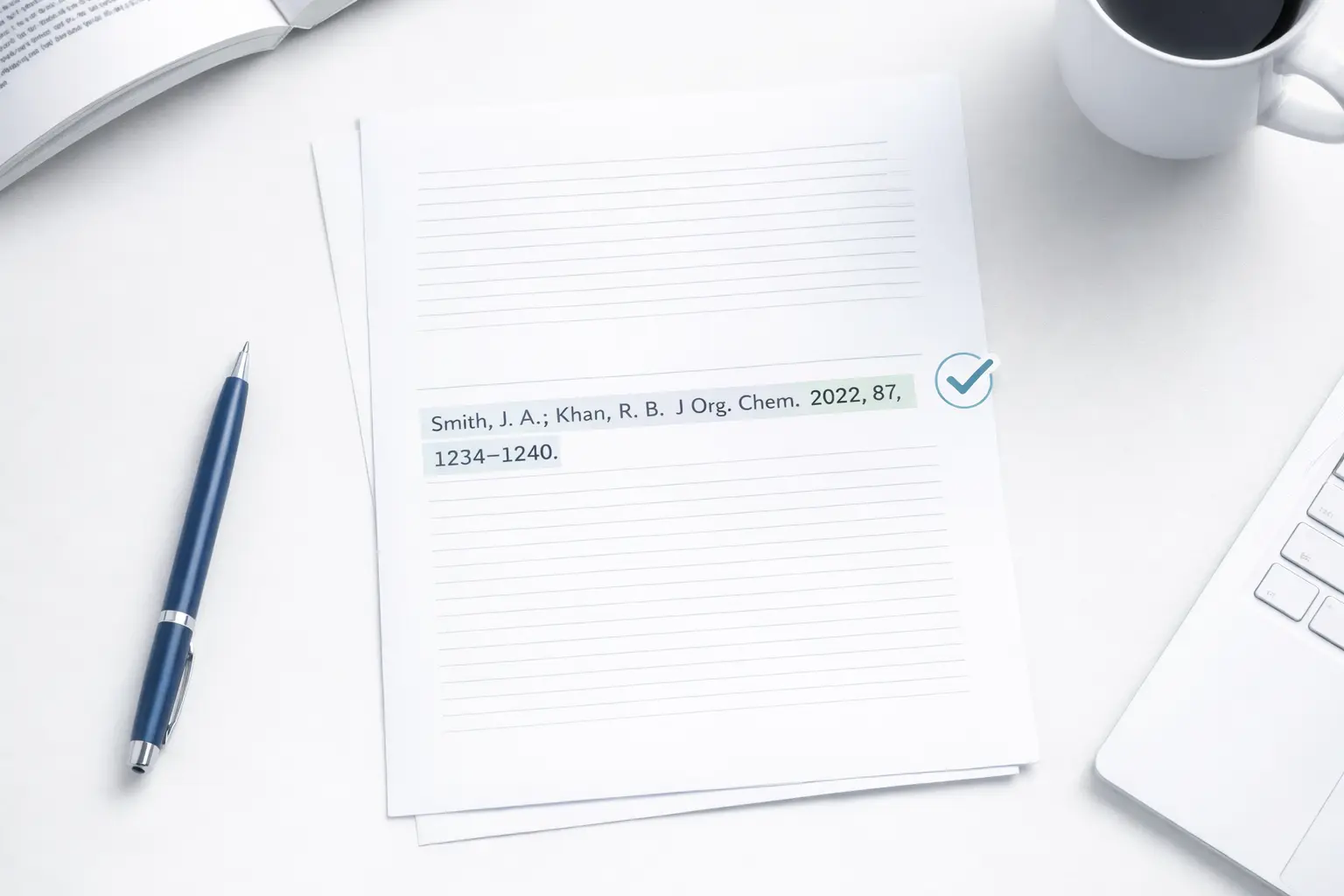
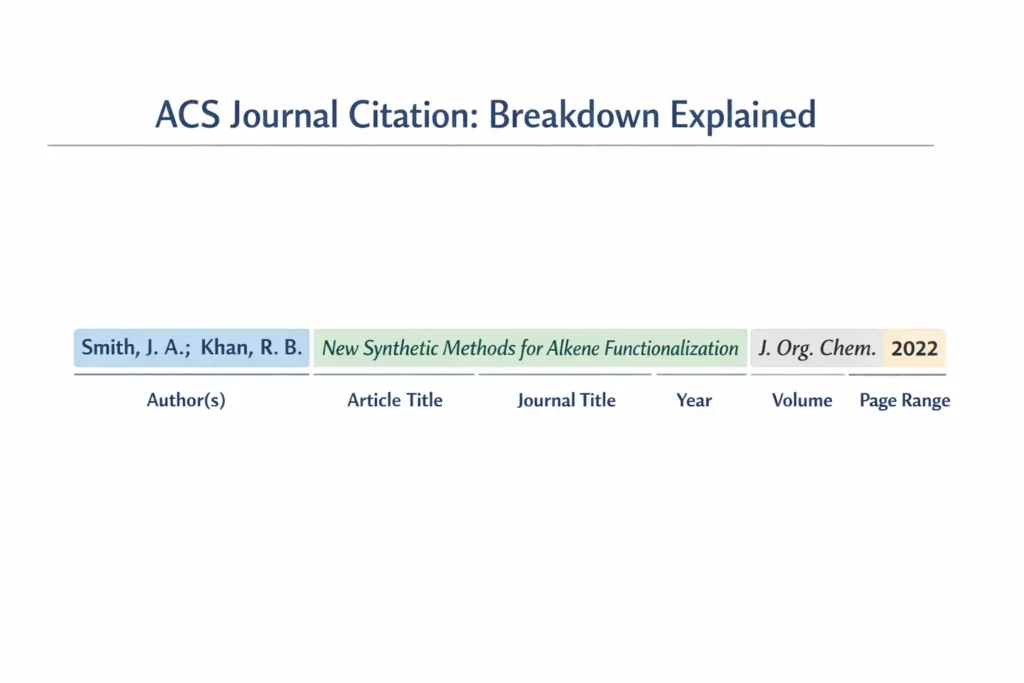
Journal formatting in ACS style requires author names, abbreviated journal titles, and bold years. You must also include the volume number in italics and specific page ranges. This structure helps researchers find sources quickly. Accuracy here is vital for the credibility of your scientific report and grade.
You’ll list the authors’ last names first. Then add their initials. If there are many authors, use semicolons to separate them. This keeps the list clean and easy to read.
Is there an acs citation format generator for books?
An ACS citation format generator efficiently handles books by arranging authors, book titles, publishers, and publication years correctly. In addition, it places book titles in italics and includes the city of publication when required. As a result, citing textbooks or handbooks becomes simple and stress-free. Moreover, the tool ensures every period and comma meets official ACS standards.
Books follow a slightly different path than journals. You need the publisher’s name and location. If you’re using a specific chapter, you must list that too. An acs citation format generator sorts these details out in seconds.
What does an acs format citation generator do?
An acs format citation generator automates the creation of your bibliography by following specific American Chemical Society guidelines. Additionally, it formats different media types like patents, reports, and websites into a clean list. At the same time, the tool organizes these entries alphabetically or numerically. Consequently, it removes the stress of memorizing complex punctuation rules.
First, we know you’re busy with labs and exams. Because of this, you don’t have time to flip through a style manual for every source. That’s why, an ACS format citation generator does the heavy lifting. Simply, you paste a link or a title, and within seconds, it gives you a perfect citation.
85% of students report less stress when they use citation tools, making these generators a helpful support during exams and final paper submissions.
Why use an acs style citation generator for websites?
Similarly, an ACS style citation generator for websites captures online data and formats it correctly for chemistry papers. In particular, it includes the site name, URL, and the date you accessed the information, ensuring proper and reliable citations. Online sources change often, so precise dating is key. This tool keeps your web references professional and easy to verify.
Websites are the wild west of citations. They don’t always have a clear author or a publication date. Our acs style citation generator scans the site to find what it needs. It formats the URL correctly so your professor can click it easily.
How does a citatin acs generator help with patents?
A citatin acs generator formats patent citations by listing the inventor, the patent country, and the document number. It also includes the year the patent was issued. Citing patents manually is difficult because they have unique codes. This generator ensures your technical references are accurate and meet formal requirements.
Notably, patents are common in chemistry papers. However, they have their own set of citation rules. For this reason, an ACS citation generator knows exactly where to place the patent number. As a result, it keeps your work looking sharp and professional.
Should you use superscript or numbers in parentheses?
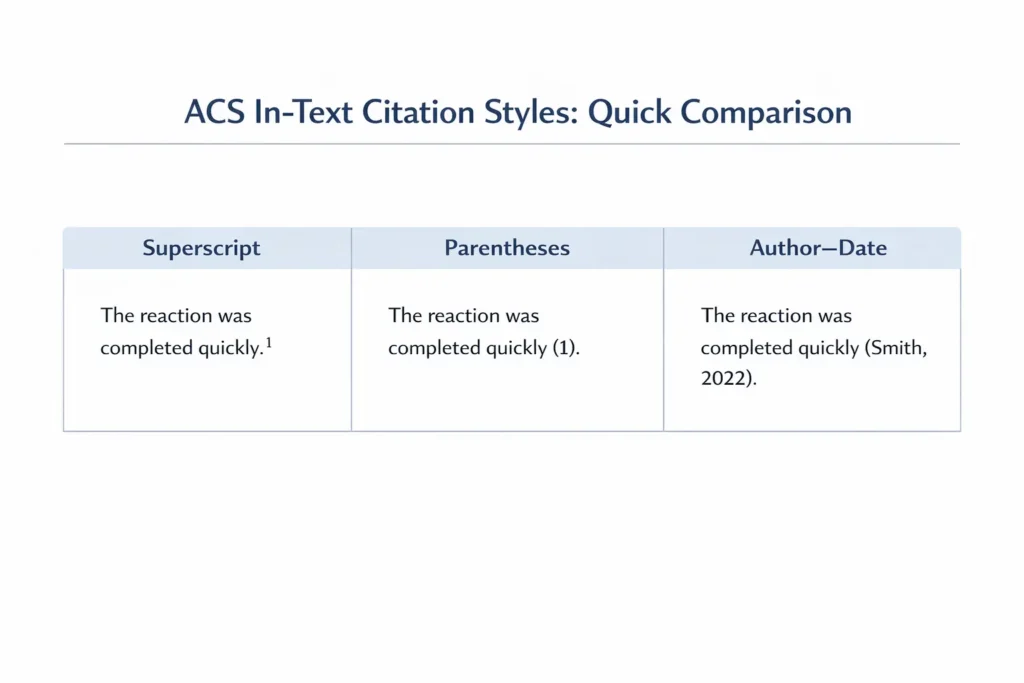
Ultimately, the choice between superscript numbers or numbers in parentheses depends on your specific assignment guidelines. In fact, ACS style allows for three different in-text citation methods. Therefore, you must check your syllabus to see which version your professor prefers. Consistency throughout the entire paper is the most important factor.
In this method, superscript numbers sit slightly above the text line. For example, they look like this: “The reaction was fast.¹” As a result, the sentences stay clean and uncluttered. Some journals prefer italics instead. We recommend asking your teacher before you start writing.
How do you list authors in ACS style?
Authors should be listed by their last name followed by their first and middle initials. You must use semicolons to separate different authors in a single citation. If a source has more than ten authors, you can list the first few followed by “et al.” This keeps your list manageable.
In ACS style, you should not use full first names. Instead, chemistry citations value space and speed, so initials are all you need. Although it is a simple rule, it is one that people often forget.
Is the year always bold in ACS?
The year is usually bold when citing journal articles in the ACS format. However, for books and other sources, the year may not be bolded depending on the specific edition of the ACS style manual. Because of this, using a citation generator ensures the bolding appears in the correct place every time. Ultimately, this small detail shows that you care about accuracy and presentation.
In practice, bolding the year helps readers scan your reference list more easily. At a glance, they can see how old the research is. Because of this, it becomes a helpful trick for scientists. Overall, it makes the bibliography more useful and easier to navigate.
What are the margins for an ACS paper?
In general, standard ACS papers use one-inch margins on all sides of the page. Additionally, you should double-space the entire text, including the reference list. Finally, use a standard font like Times New Roman in 12-point size. Together, these settings make your paper easy for professors and peers to read and grade.
First impressions matter, and a good layout helps create one. In turn, it shows you’re a serious student. For clarity, keep your text aligned to the left. At the same time, don’t worry about making the right side perfectly even.
How do you cite a lab manual?
When citing a lab manual, list the department or university as the author and place the manual title in italics. In addition, include the city, state, and the year the manual was printed to ensure complete and accurate citations. You should also mention the specific experiment number or page range. This helps your instructor verify your lab procedures easily.
Because lab manuals are unique to your school, they do not have an ISBN like a textbook. Therefore, you should treat them like a corporate report. In this way, it becomes the best approach to keep your references clear and consistent.
Does ACS style use “hanging indents”?
ACS style does not typically use hanging indents for the reference list if you’re using numbered citations. Instead, the references are numbered and aligned with the left margin. When using the author–date system, you should apply a hanging indent to each reference entry. In addition, always check your specific journal requirements to ensure your formatting is correct.
Hanging indents are common in APA but rare in chemistry. Most students use the numbered list. It looks like a simple list from one to ten. It’s much cleaner on the page.
If you are moving from English or social science courses to chemistry, this quick comparison shows how ACS differs from APA and MLA citation styles.
| Feature | ACS | APA | MLA |
|---|---|---|---|
| Primary Field | Chemistry & Sciences | Social Sciences | Humanities |
| In-text Citation | Numbers or Author-Date | Author-Date | Author-Page |
| Year Formatting | Bold (journals) | Normal | Normal |
| Journal Title | Italic | Italic | Italic |
| Volume Number | Italic | Italic | Not always used |
| Page Numbers | Required | Required | Required |
| Reference List Style | Numbered or Author-Date | Alphabetical | Alphabetical |
| Common Use | Chemistry papers | Psychology, Education | Literature, Arts |
Can we cite a personal communication?
Personal communications like emails or interviews should be cited in the text but not in the bibliography. You must include the name of the person and the date of the talk. Use parentheses to hold this information right after the mention. This keeps your official reference list for published work only.
Maybe you talked to your professor after class. That counts as a source. Just don’t put it in the final list. Keep it in the body of your paper.
Final thoughts on chemistry citations
Citations don’t have to be a headache. Use the tools available to you. We built our generators to make your life easier. Focus on your experiments and your data. Let us handle the formatting.
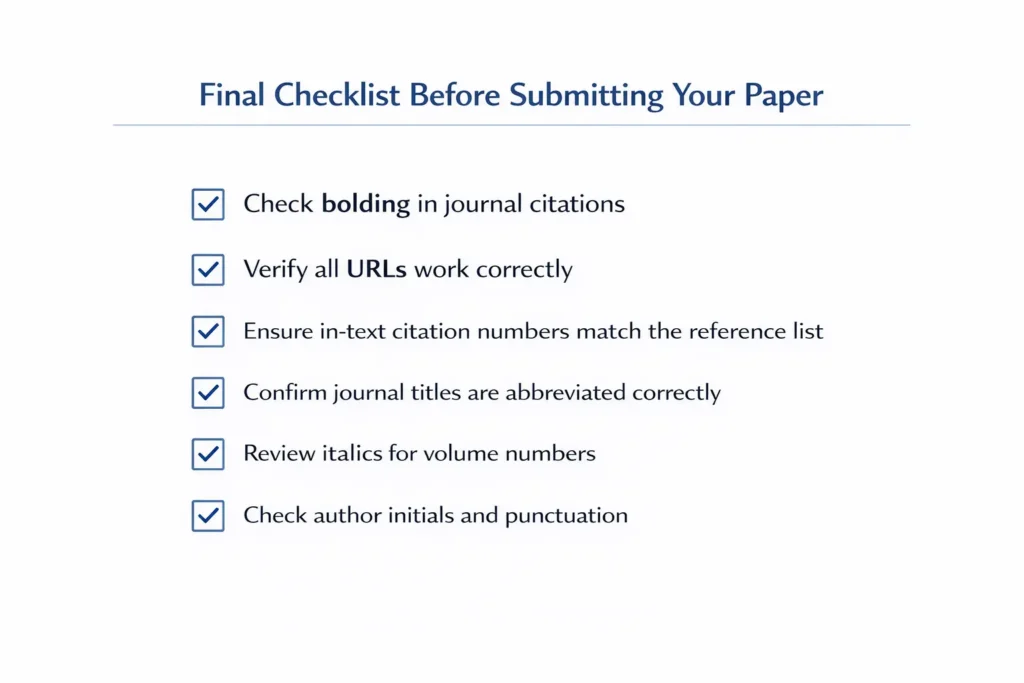
Writing a great paper takes time. You’ve done the hard part in the lab. Now, make sure the final product looks professional. Use an acs citation generator and finish strong. Your grade will reflect the effort you put in.